



Опис
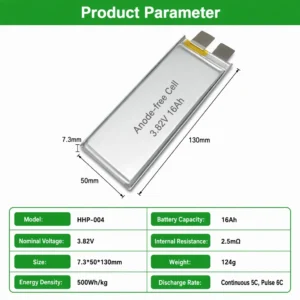
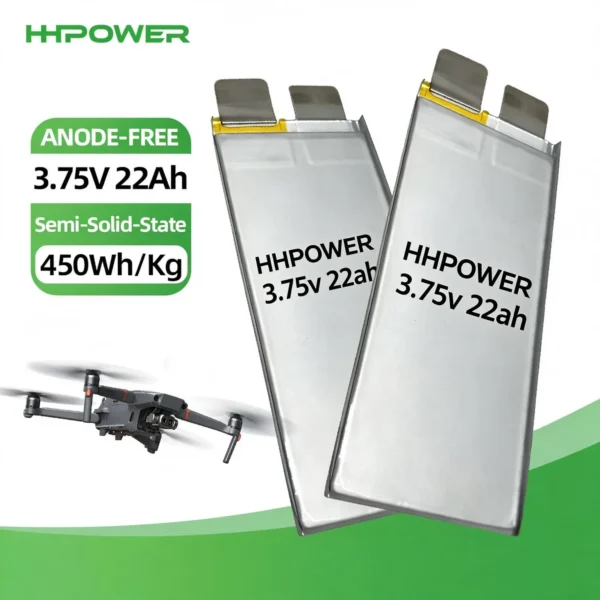
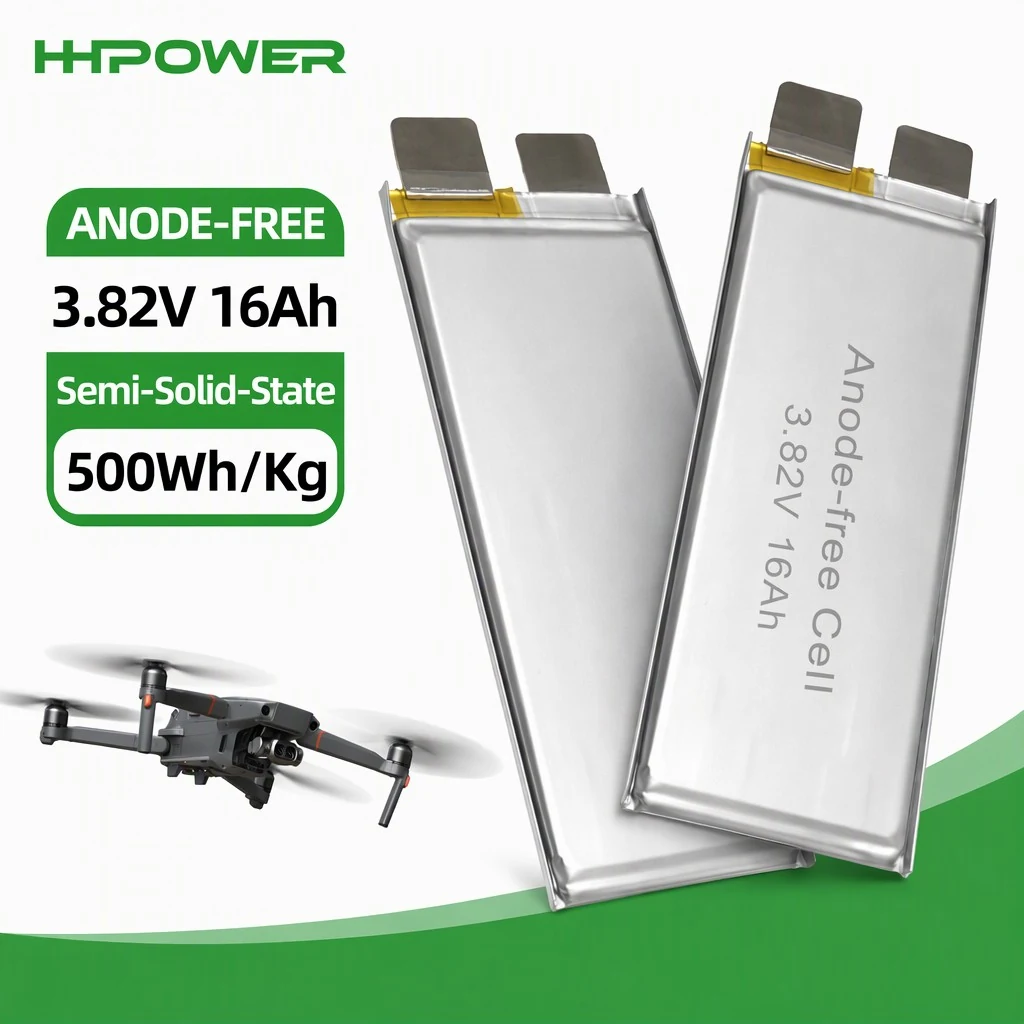
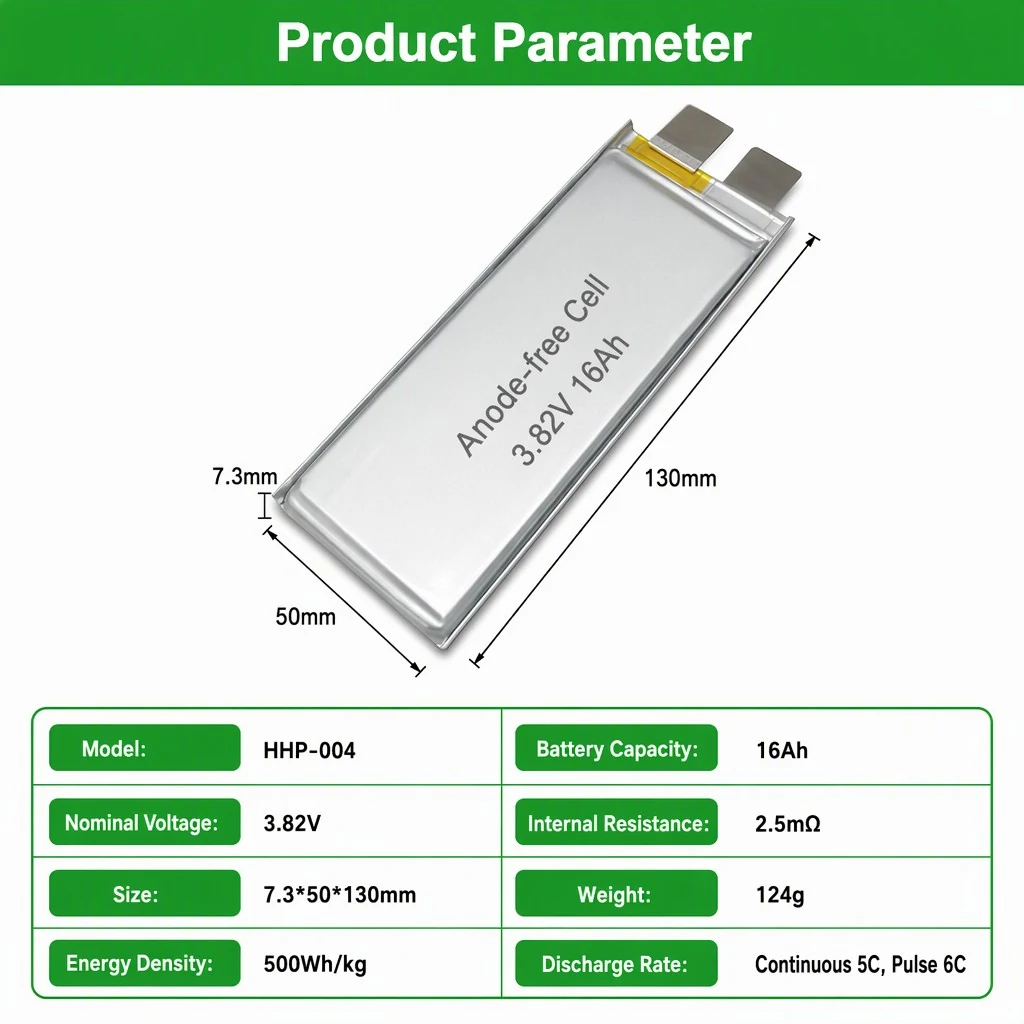
This 16Ah anode-free battery runs at 3.82 V and 500 Wh/kg, a slightly higher voltage than the 3.75 V anode-free version.
HHPOWER 3.82 V / 16 Ah anode-free semi-solid state lithium pouch cell with an energy density of 500 Wh/kg. It is built for UAV platforms where every gram of cell weight translates directly into flight time — long-range FPV airframes, inspection drones and VTOL aircraft.
Why anode-free semi-solid state
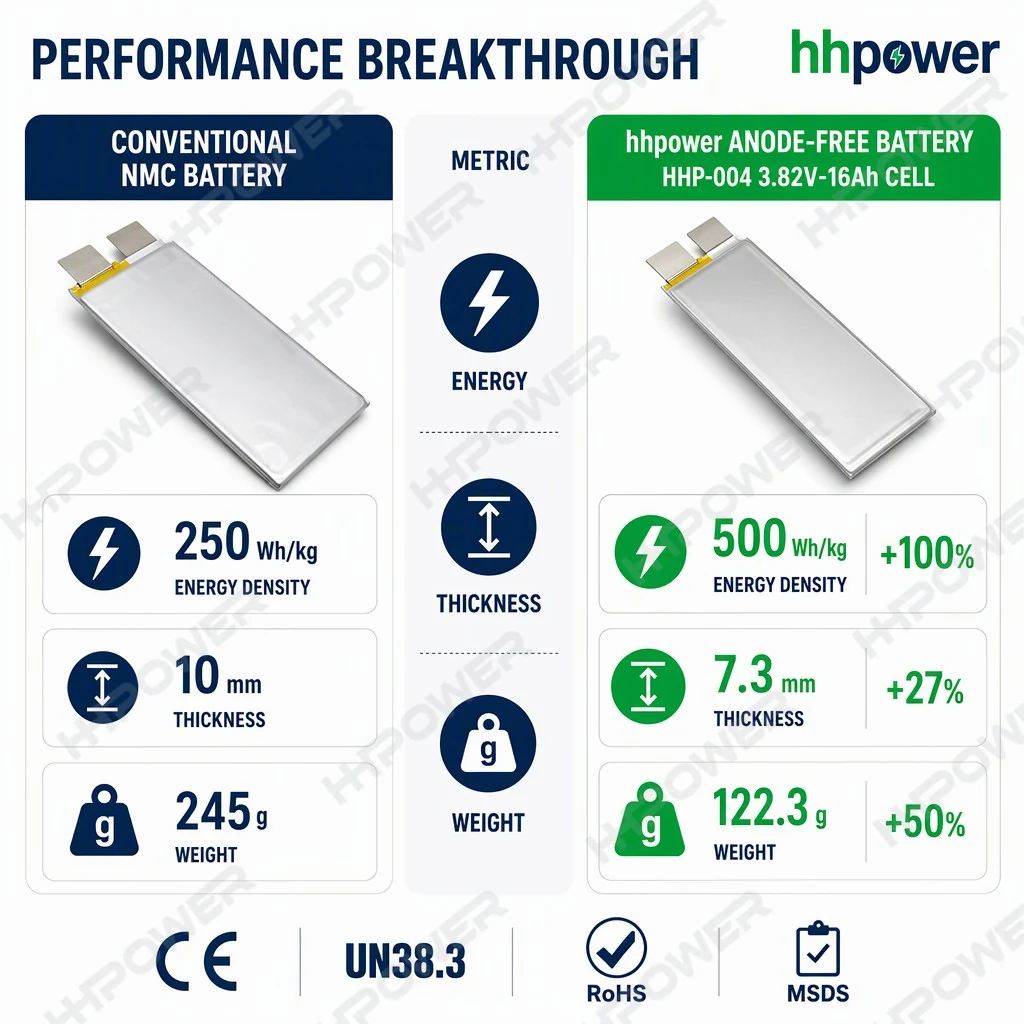
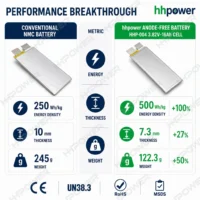
- 500 Wh/kg energy density — 124 g per cell delivers 16 Ah, extending endurance without adding pack weight.
- 5 C continuous discharge — sustains high-current climbs and aggressive throttle without voltage collapse.
- -25°C to 60°C operating range — stable output in cold-altitude and high-temperature field conditions.
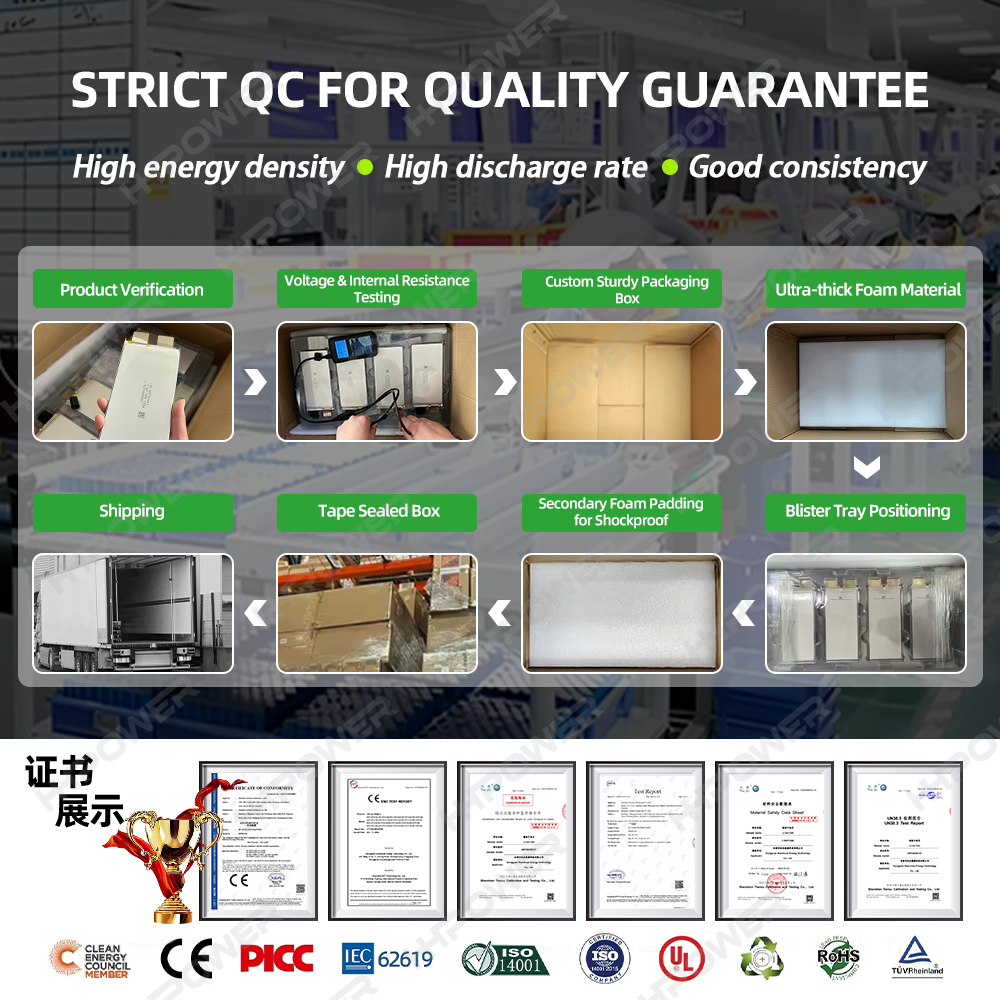
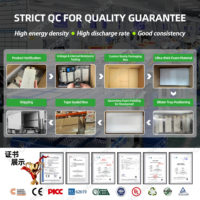
- Certified for export — CE, RoHS, UN38.3 and MSDS documentation available for air and sea freight.
Застосування
- Long-range FPV and racing drones
- VTOL and fixed-wing UAV platforms
- Aerial inspection, mapping and surveying aircraft
- Heavy-lift and specialty airframes requiring high energy density
Specifications
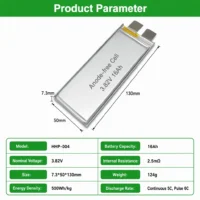
| Model | HHP-AF001016 |
| Cell type | Anode-free semi-solid state, pouch |
| Cathode material | LiNiMnCoO2 (NMC) |
| Nominal voltage | 3.82 V |
| Nominal capacity | 16 Ah (16,000 mAh) |
| Energy density | 500 Wh/kg |
| Max continuous discharge | 5C |
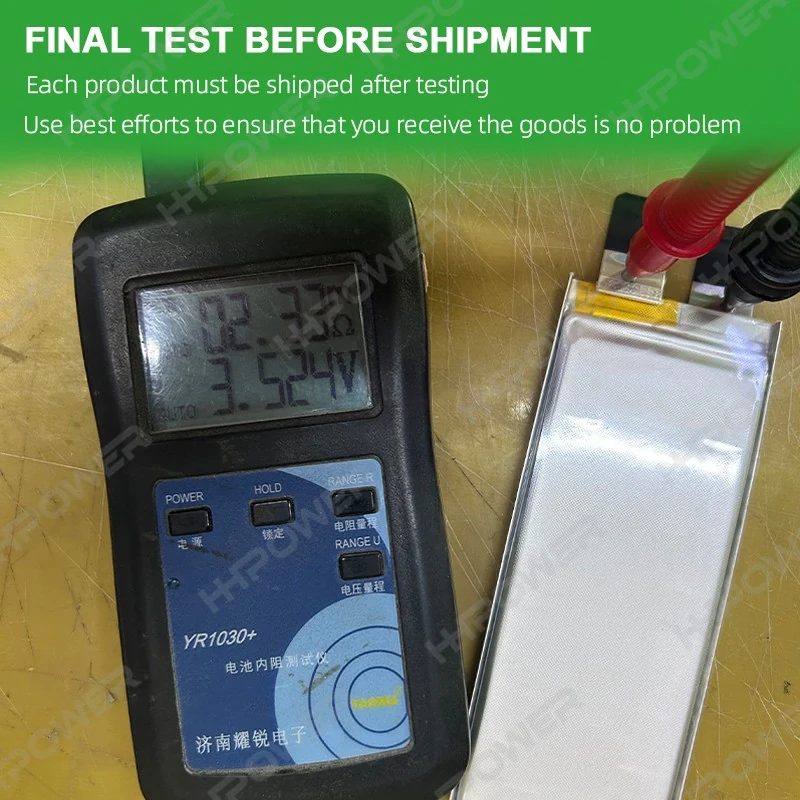
| Internal resistance | 2.5 mΩ |
| Charge cut-off voltage | 4.3 V |
| Cycle life | 20 cycles |
| Operating temperature | -25°C to 60°C |
| Cell weight | 124 g |
| Cell dimensions | 7.3 × 50 × 130 mm |
| Certification | CE / RoHS / UN38.3 / MSDS |
| Warranty | 12 months |
| Place of origin | Guangdong, China |
OEM / ODM customization
HHPOWER manufactures in-house and supports customization on capacity, cell dimensions, tab and connector configuration, and full battery pack assembly including BMS, housing and protection circuitry. Tooling and samples are available for both trial and mass production.
16Ah anode-free battery and voltage headroom
The 3.82 V nominal of the 16Ah anode-free battery gives more headroom at the top of the discharge curve, which helps airframes that sag under load late in the flight. Energy density stays at 500 Wh/kg, so the weight budget does not change.
Because the top of charge sits higher, confirm the charger full-charge voltage and the BMS cut-off against this cell rather than the 3.75 V version. A sample pair is the quickest way to compare both on the same log.